
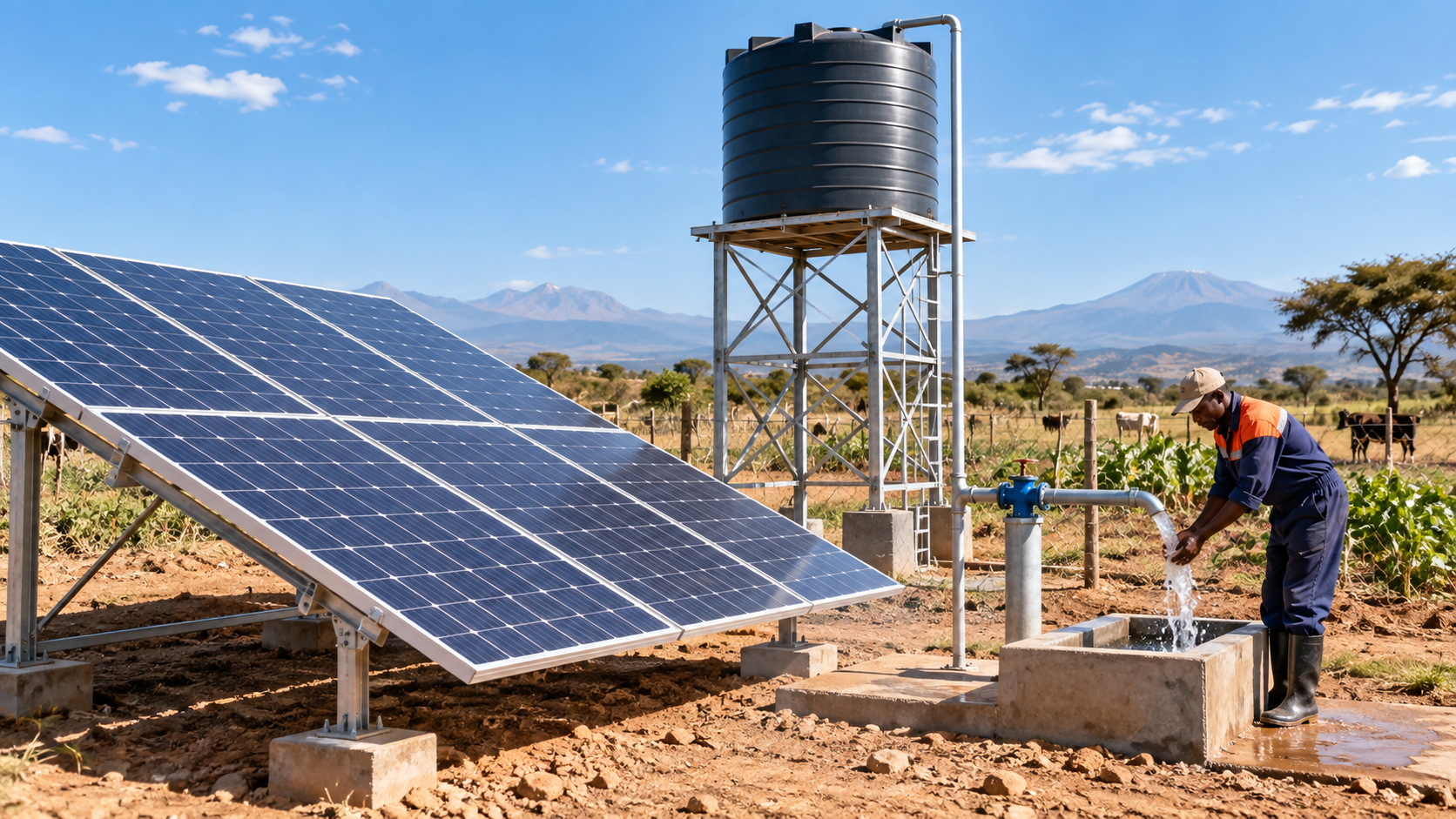
Solar water pumping can reduce fuel costs and improve water availability for farms, institutions, homes, livestock operations, and remote sites. But the system must be sized around real hydraulic demand. A pump that is too small will disappoint users, while an oversized system can waste money and create operational issues.
Water demand comes before equipment selection
The first design question is how much water is needed per day. Domestic supply, livestock watering, irrigation, flower farms, tea farms, dairy operations, and institutional use all have different demand profiles. The system should be sized around daily volume, seasonal demand, and the hours during which pumping is possible.
Storage is also part of the design. A solar pump may produce most water during peak daylight hours, while users may need water in the evening, early morning, or throughout the night. Proper tank sizing bridges that gap.
Understand total dynamic head
Pumping head is one of the most important inputs. Total dynamic head includes vertical lift, pipe friction losses, distance to the tank or delivery point, and pressure requirements. A borehole pump lifting water from deep underground needs very different power from a surface pump moving water over a short distance.
Reliable borehole data is therefore valuable. Static water level, dynamic water level, borehole depth, tested yield, casing size, and water quality all help determine the right pump and controller.
Match the pump to the source
Different water sources call for different pumping choices. Boreholes often need submersible pumps. Shallow wells and surface water sources may use surface pumps. Some applications require pressure boosting, filtration, or water-treatment integration.
Water quality affects durability. Sand, silt, salinity, and mineral content can influence pump selection, filtration needs, and maintenance intervals.
Solar array and controller sizing
The solar array must provide enough energy for the pump to meet daily demand under realistic sunlight conditions. Pump controllers help manage motor operation, dry-run protection, and available solar power through the day. In some sites, hybrid input from grid or generator may be useful during cloudy periods or urgent demand.
What a complete solar pumping design should include
- Daily water demand and desired pumping hours.
- Borehole or source data, including head and yield.
- Pump type, motor rating, controller selection, and protection plan.
- Solar array capacity and mounting approach.
- Storage tank volume, pipe route, and delivery pressure requirements.
- Maintenance plan for pump, panels, filters, and controls.
Why engineering matters
Solar water pumping works best when electrical and hydraulic design are treated together. The panels, controller, pump, pipework, storage, and protection devices must operate as one system. When each piece is sized around the actual water requirement, the result is more reliable water access and lower operating cost.