
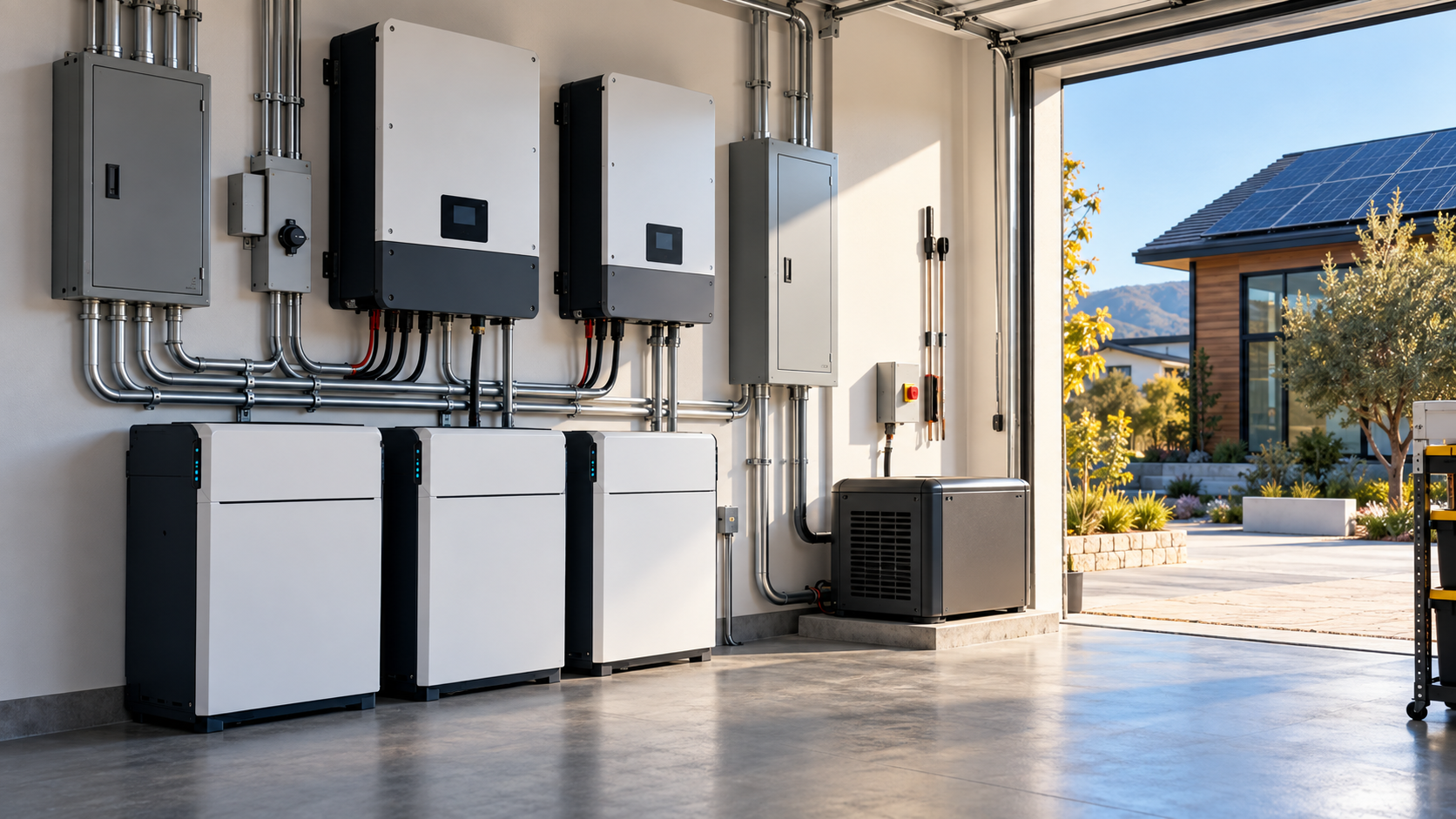
Hybrid solar backup systems are becoming one of the most practical ways for homes and businesses to manage power interruptions, rising energy costs, and critical-load reliability. A hybrid system combines solar panels, batteries, an inverter, grid power, and sometimes generator input into one coordinated power architecture.
Backup design starts with priority loads
The first step is deciding which loads must remain powered when the grid fails. In a home, this may include lighting, refrigeration, security, internet, water pumping, selected sockets, and entertainment. In a business, it may include tills, servers, access control, cold rooms, medical equipment, or production support loads.
Trying to back up everything often makes the system unnecessarily expensive. A better approach is to separate essential loads from non-essential loads and design the battery around the circuits that genuinely need continuity.
Battery autonomy should be realistic
Battery sizing is usually expressed in kilowatt-hours, but the important question is how long the selected loads can run. A 10kWh battery will perform very differently depending on whether the backed-up demand is 500W, 2kW, or 5kW. Autonomy targets should be built from the actual load list, not guesswork.
For daytime outages, solar can support the loads and recharge the battery. For evening or overnight outages, the battery carries more of the work. This is why operating patterns matter.
Hybrid inverters coordinate the system
The inverter is the control center. It manages solar input, battery charging and discharging, grid interaction, backup output, and in some cases generator input. The right inverter depends on phase requirements, surge loads, battery compatibility, monitoring needs, and the desired operating mode.
Equipment selection should also consider serviceability. A well-known inverter brand with proper local support, available spares, and clear monitoring tools is usually a stronger long-term choice than a cheaper system with uncertain support.
Solar improves backup economics
A battery-only backup system can solve outages, but it still depends on grid power or a generator for charging. Adding solar changes the economics because daytime generation can run loads and recharge batteries with clean energy. For businesses with steady daytime consumption, this can reduce both outage risk and electricity bills.
Generator integration can still be useful
For larger homes, remote sites, and critical businesses, a generator may remain part of the system. The goal is to reduce generator run hours, not always to remove the generator immediately. A correctly configured hybrid system can use solar first, battery second, grid where available, and generator only when required.
What to check before buying
- Clear essential-load schedule and expected backup duration.
- Battery chemistry, usable capacity, and warranty conditions.
- Inverter rating, surge capability, phase requirements, and monitoring.
- Protection devices, changeover logic, and installation workmanship.
- Room ventilation, cable routing, labelling, and maintenance access.
The outcome to aim for
A good hybrid backup system should feel boring in the best way: predictable, quiet, safe, and easy to monitor. It should keep priority loads running, reduce generator dependence, and give the owner a clear understanding of how the system behaves during normal operation and outages.